

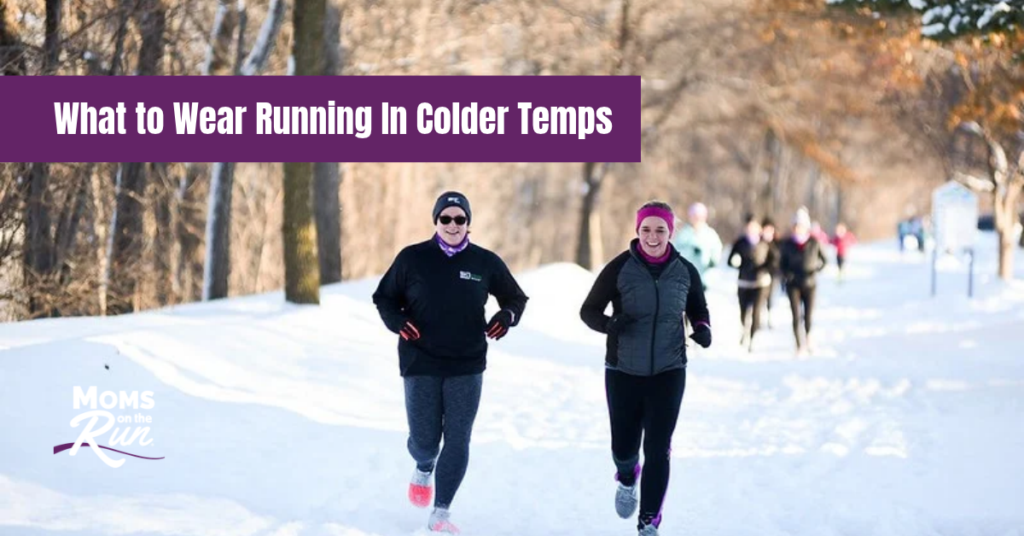
Cold weather doesn’t have to put your running routine on hold. With the right winter running clothes, you can stay comfortable and active throughout much of the season.
HOW TO DRESS FOR WINTER RUNNING
A good rule is to dress as though it’s 10 to 20 degrees warmer than the actual temperature. Your body will warm up once you start moving. Choose moisture-wicking fabrics instead of cotton, then add insulation and wind protection as temperatures fall.
“These are just starting points,” says Karissa Johnson, Moms on the Run Head Mom. “Weather can change everything. Wind, rain, snow and sunshine all make a difference. So does how hard you’re working and how well you handle the cold. Pay attention to how you feel and adjust from there.” In addition, check and factor in the wind chill or ‘feels like’ temperature before heading out.
Temperature |
Bottoms |
Tops |
Accessories |
| 50–60°F | Shorts or lightweight leggings | Short-sleeve or lightweight long-sleeve shirt | Optional light gloves |
| 40–50°F | Capris or lightweight tights | Long-sleeve moisture-wicking shirt, optional light vest | Light gloves, optional headband |
| 30–40°F | Full-length running tights | Long-sleeve base layer + lightweight jacket or vest | Gloves, headband or light hat, wool or synthetic socks |
| 20–30°F | Thermal running tights | Moisture-wicking base layer + insulating layer + wind-resistant jacket | Warm gloves or mittens, winter hat, wool or synthetic socks, optional neck gaiter |
| 10–20°F | Thermal or fleece-lined tights | Base layer + insulating mid-layer + wind-resistant jacket | Warm mittens, winter hat, neck gaiter, warm socks |
| 0–10°F | Thermal tights + optional wind-resistant outer layer | Warm base layer + insulating mid-layer + wind-resistant jacket | Insulated mittens, warm hat, neck gaiter or face covering, warm socks |
| Below 0°F | Maximum insulation + wind protection | Multiple moisture-wicking and insulating layers + wind-resistant outer layer | Cover exposed skin and check wind chill before running |
Running on Snow and Ice: Don’t Forget Traction
Cold isn’t the only winter running hazard. Snow and ice can make even familiar routes dangerous.
First, slow down and shorten your stride when surfaces are slippery. Avoid sudden turns and give yourself more time to stop.
For snowy or icy conditions, consider:
- Running shoes with good tread
- Traction devices designed to fit over running shoes
- Trail running shoes like the Kizik Hands-Free Freedom Trail for better grip on packed snow
- Routes that are regularly plowed or treated
- Running during daylight so you can spot icy patches
Be especially careful when temperatures hover around freezing. Melting snow can refreeze and create black ice, which may be difficult to see.
Most importantly, know when traction isn’t enough. If freezing rain has coated sidewalks and roads or you can’t safely maintain your footing, take your workout indoors.
Be Visible During Dark Winter Runs
Shorter days also mean more running in the dark. Bright clothing like our high-visibility long sleeve helps during daylight, but reflective and illuminated gear is especially important after dark. Research cited by the National Highway Traffic Safety Administration shows that retroreflective materials can help drivers detect pedestrians sooner, particularly when placed on moving areas such as the wrists and ankles.

For dark runs:
- Wear reflective gear
- Use a headlamp
- Add flashing lights to your front and back
- Choose well-lit routes when possible
- Run facing traffic when sidewalks aren’t available
Never assume a driver can see you.
When Is It Too Cold to Run?
There isn’t one temperature at which everyone must stop running. Wind, clothing, precipitation and individual tolerance all matter. For the comfort and safety of our Moms on the Run members at class, we cancel runs at temps below 0 degrees with windchill.
The American College of Sports Medicine recommends increased caution when wind chills fall below -18°F because frostbite risk increases. The National Weather Service reports that at a wind chill near -20°F, exposed skin can freeze in about 30 minutes.
Consider the dangers of keeping your workout outdoors when:
- Wind chill approaches -18°F to -20°F or colder
- An Extreme Cold Warning is in effect
- Freezing rain or ice makes footing unsafe
- Blizzard or whiteout conditions reduce visibility
- You can’t adequately protect exposed skin
Remember, there is no prize for completing the coldest or iciest run!
Run Smart This Winter
“Winter running can be peaceful, beautiful and a lot of fun when you’re prepared,” says Johnson. “As we like to say at Moms on the Run, “it’s only cold if you’re standing still!” A little planning can make a big difference in how comfortable you are out there.”
“Before you head out, check the temperature, wind chill, precipitation and road conditions,” she adds. “Then dress for the weather and choose a route that feels safe for the conditions.”
Stay active and connected all winter with a supportive group of women who make cold-weather miles more fun. Find a Moms on the Run location near you and discover local running, walking and fitness programs.
References
American College of Sports Medicine. Prevention of Cold Injuries During Exercise.
National Highway Traffic Safety Administration. Conspicuity Enhancement.
National Weather Service. Understanding Wind Chill.
National Weather Service. Cold Weather Safety.