


As the seasons change, your training should change with them. If you’re a runner, it can be tempting to think that training means always doing more—more miles, more speed, more races, more intensity. But your body doesn’t thrive on peak effort all year long. In fact, some of the best training you can do happens when you’re not training for a race.
At Moms on the Run, our training naturally follows the seasons. As an example for how we train in the northern US, spring and summer are often filled with race training, while fall provides an opportunity to focus on fitness and strength and winter becomes an important recovery and cross-training season for many of our athletes. Each phase has a purpose—and together, they create a stronger, healthier, more sustainable runner.
Build, Train, Race
When the weather turns ideal, many runners start looking ahead to their upcoming races. This is when training becomes more race-specific. Early in the season, the focus may be on building your aerobic base—gradually increasing your running, improving endurance, and getting your body ready for more challenging workouts. When a runner has found her stride, training can shift toward strength and speed development. Intervals, hills, tempo runs, and other quality workouts help your body become more efficient and prepare you for the demands of your goal race.
Eventually, training becomes even more race-specific. You may practice your goal pace, work on pacing strategies, and complete longer runs that prepare you physically and mentally for race day. Then comes the taper—a planned reduction in training that allows your body to recover and show up ready to perform. The goal isn’t to stay at peak intensity forever. The goal is to peak when it matters.
Fitness & Strength
Once your goal race is behind you, it can be a great time to change gears. Rather than immediately signing up for another race and jumping back into intense training, use this season to focus on overall fitness, strength, conditioning, and movement quality.
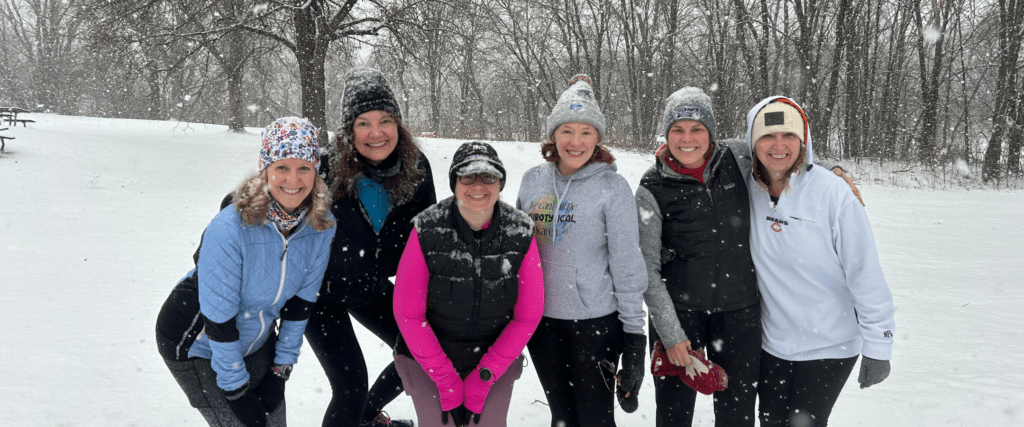
This is a great time to incorporate more strength training, try different workouts, work on mobility, or simply enjoy running without the pressure of a race goal.
Strength training is especially important for women as we age, maintaining muscle strength to support not only running performance but everyday activities. It helps keep the body resilient against the demands of running. Think of this season as an opportunity to fill in the gaps in your training. Maybe you need to work on your core strength. Maybe hills have always been challenging. Maybe you’ve been skipping strength workouts because race training took priority. This is your chance to build those areas back into your routine.
Your Off-Season Is Still Training
For many Moms on the Run athletes, winter becomes the natural off-season. The weather may make outdoor running more difficult, race schedules slow down, and life may naturally shift into a different rhythm. And that’s okay! An off-season doesn’t mean you have to stop exercising. It means you can change what you’re asking your body to do. Winter is a fantastic time to focus more heavily on cross-training and strength training. You might spend more time lifting weights, cycling, using an elliptical, taking fitness classes, or doing other activities that keep you moving without requiring you to run every day. You can also use this time to work on mobility, stability, balance, and areas of weakness that may have been overlooked during race season.
And perhaps just as importantly, winter gives your mind a chance to reset.Running year-round with the same level of intensity can become physically and mentally exhausting. A change in routine can help bring back the enjoyment of running and leave you feeling motivated when spring training begins again.
Why Changing it up is a Good Strategy
Your body adapts to the stress you place on it. That’s why progressive training works—but it’s also why doing the exact same thing at the same intensity all year isn’t necessarily the best strategy. Seasonal training gives you opportunities to stress your body, recover, adapt, and then build again.Each phase prepares you for the next one.
Think Long-Term, Not Just Race-to-Race
One of the biggest benefits of seasonal training is that it helps you think beyond your next 5K, 10K, half marathon, or marathon. Maybe you don’t feel like you’re “training” when you’re doing strength workouts in January instead of logging lots of miles. But that strength can help you become a stronger runner when you return to race training in the spring. Maybe an easy fall run doesn’t feel as exciting as a hard interval workout. But giving your body a break from constant intensity can help you come back ready to work. And maybe taking a few weeks away from structured running feels strange. But recovery is part of training, too.
There is no wasted season. Every phase gives your body—and your mind—something different that it needs.
At Moms on the Run, we believe running should be something you can enjoy for years—not something you have to push through until you’re burned out or injured. That’s why our training changes throughout the year. The next time you find yourself wishing you were doing more during the off-season, remember: you don’t have to train at peak intensity all year to become a better runner. Sometimes the smartest thing you can do for your next race is to step back, get stronger, try something different, and give your body a chance to recover. Because great running isn’t built in one season. It’s built over time.