


If you’ve ever wondered, “Am I running enough?” or “Am I running too much?” you’re not alone.
The good news is that there isn’t one perfect number of days everyone should run. Instead, the best running schedule depends on your goals, experience, fitness level and how well your body recovers. The goal isn’t to run every day, but rather, to run consistently.
Whether you’re training for your first 5K, working on a half-marathon or marathon training plan, or simply running to stay healthy, finding the right balance can help you stay motivated, avoid injuries and enjoy running for years to come.
For General Health: 2–3 Days Per Week
If your goal is to improve your overall health, you don’t have to run every day to see benefits.
In fact, running just two or three days each week can improve cardiovascular health, strengthen bones, boost your mood and reduce stress. Additionally, running has been shown to lower the risk of chronic disease and improve overall well-being.
On your non-running days, activities like walking, strength training, cycling or yoga help build fitness while giving your body time to recover. As a result, you’ll stay active without putting too much stress on your body.
Remember, every workout counts. Most importantly, consistency matters more than perfection.
For New Runners: 3 Days Per Week
If you’re just getting started, the sweet spot often is running three days each week.
This approach gives your muscles, joints and connective tissues time to adapt while still building endurance. For example, you might run on Monday, Wednesday and Saturday, with walking or strength training on the other days.
Many beginners find success with a run-walk approach, gradually increasing running time as fitness improves. Over time, your endurance will grow and running will begin to feel easier.
Don’t worry about your pace. Instead, focus on building the habit first.

For Training: 4-5 Days Per Week
If you’re training for a race or looking to improve your performance, four or five running days each week can provide enough variety to help you get stronger.
A balanced week might include:
- One speed or hill workout
- One easy recovery run
- One longer run
- One or two easy runs
Not every run should be hard. At Moms on the Run, we believe most of your running should feel comfortable. Our National Fitness Director, Olympian Carrie Tollefson, encourages runners to keep easy runs at a conversational pace. As a result, your body recovers while continuing to build endurance.
A helpful guideline is the 80/20 rule. About 80% of your training should be easy, while only 20% should be higher intensity. Research shows this balance helps improve performance while lowering injury risk.
Should You Run Every Day?
For most runners, the answer is ‘no’. Although running is an excellent form of exercise, your body still needs time to recover. Rest allows muscles to repair, reduces fatigue and helps prevent overuse injuries.
Fortunately, recovery doesn’t always mean sitting still. Walking, stretching, mobility work or strength training are all excellent ways to stay active while giving your body a break from running. Think of recovery as part of your training, not time away from it.
What If You’re Prone to Injuries?
If you’ve dealt with running injuries, focus on running smarter.
First, increase your mileage gradually and include two days of strength training each week. Additionally, keep easy runs easy and use walking or cross-training to support recovery.
Pay attention to persistent soreness or sharp pain. These are signs your body needs extra recovery. Taking a day or two off now can help prevent a longer setback later.
Finally, don’t forget to bring in the experts. That pain that won’t go away is a good indication you may need to see a physical therapist, chiropractor or physician. Get the support you need to get back out there safely and enjoy running for a long time to come!
Listen to Your Body
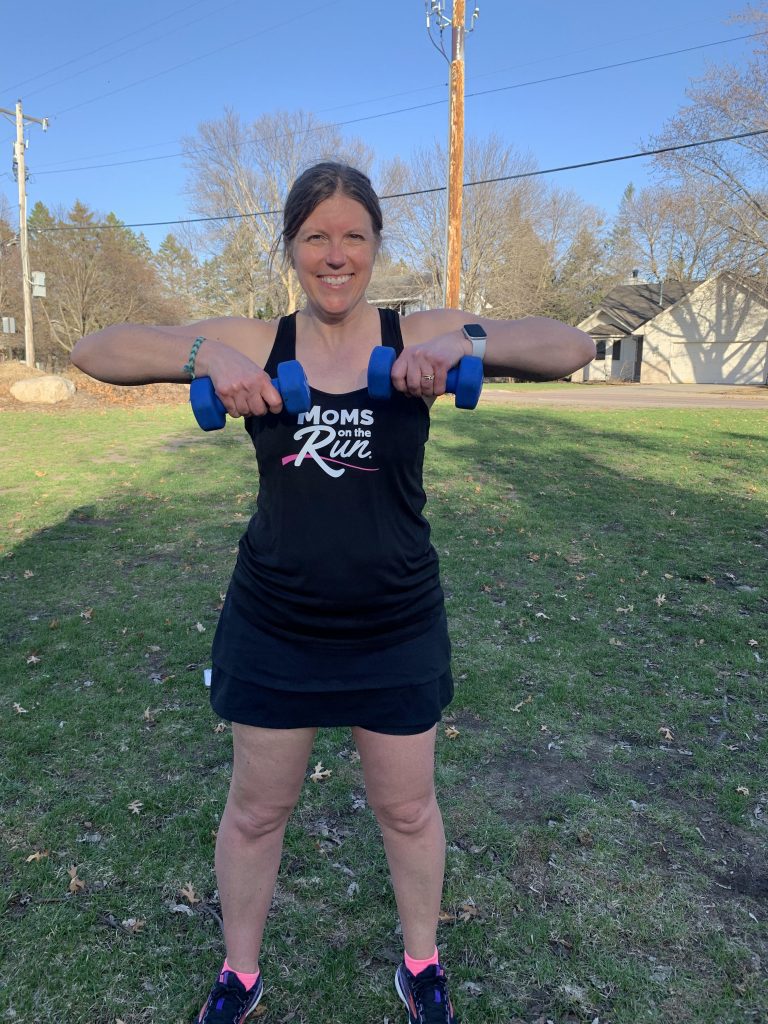
The best running plan is one you can stick with. If you’re constantly sore, exhausted or struggling to complete workouts, you may need more recovery. If your runs feel easy and you’re recovering well, you may be ready to gradually add another day.
Above all, pay attention to how you feel, not just what’s written on a training calendar. Every runner is different, and your schedule should reflect your individual needs.
Quality Over Quantity
Running more doesn’t always make you a better runner. A well-balanced training plan includes running, strength training, flexibility and recovery. This will help you build endurance, stay healthy and continue making progress.
That’s exactly why Moms on the Run combines coach-led workout classes with strength training and a supportive community. Our programs help women of all fitness levels train smarter, not just harder.
Ultimately, whether you run two days a week or five, the most important thing is to keep moving, celebrate your progress and enjoy the journey. Your future self will thank you.
—
References
American College of Sports Medicine. (2022). *Healthy Habits for Distance Running.*
U.S. Department of Health and Human Services. (2018). *Physical Activity Guidelines for Americans, 2nd Edition.*
Seiler, S. (2010). *What is Best Practice for Training Intensity and Duration Distribution in Endurance Athletes?* International Journal of Sports Physiology and Performance.