

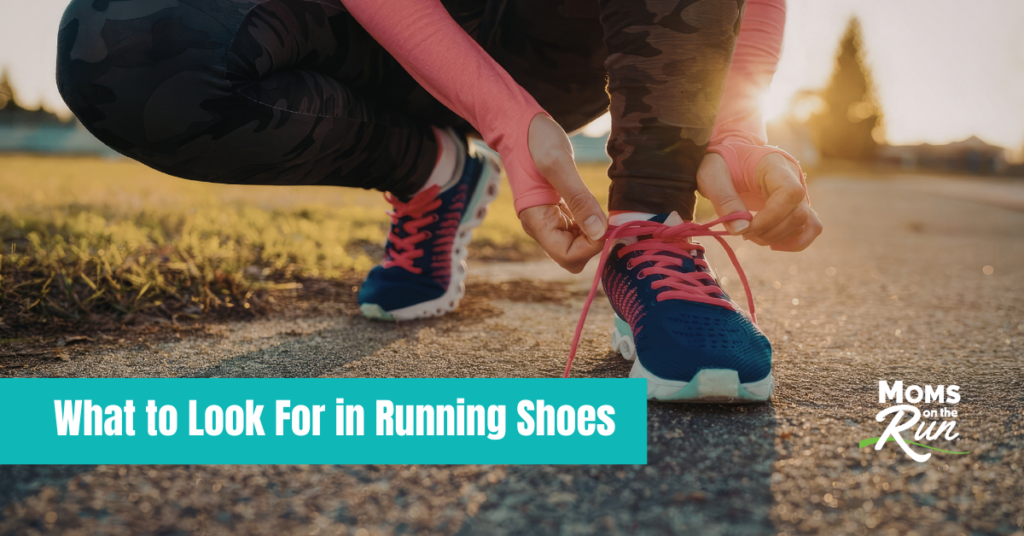
Choosing the right running shoes is one of the most effective ways to improve comfort, performance, and reduce injury risk. With so many options on the market, it’s easy to feel overwhelmed, but the goal is simple: find a shoe that matches your foot, your stride, and your training. Runners generally fall into neutral, stability, or motion-control categories, depending on how their foot moves through each step. Gait analysis can be helpful, and locally in Minnesota, we recommend purchasing shoes from the trained staff at TC Running (not to mention their 15% discount for Moms on the Run!). Ultimately though, comfort is the most reliable indicator. A shoe should feel good from the start; it shouldn’t need a “break-in” period.
Cushioning is another key factor, and it’s not a one-size-fits-all decision. Some runners prefer plush, highly cushioned models for running shoes. These absorb more impact and feel soft underfoot, especially for long distances. Others feel more efficient in firmer, more responsive shoes that provide better ground feedback. Neither is inherently better; it depends on your body, your biomechanics, and the type of running you do. If you’re prone to joint discomfort, go with more cushion to reduce impact forces, or choose lighter more responsive shoes for their benefit during speed workouts or races.
Beyond choosing the right running shoe, many runners benefit from rotating between two or more pairs. Shoe rotation allows the foam in each time to decompress and recover between runs, which can extend the life of the shoe and maintain its support. This also introduces slight variations in cushioning and structure, which can reduce repetitive stress on the same muscles and joints. Some will alternate between a cushioned daily trainer and a lighter performance shoe to balance comfort and efficiency throughout the week.
Understanding when to replace your running shoes is just as important as choosing them. Most shoes last between 300–500 miles, but that can vary based on your running style, body weight, and terrain. Signs it’s time for a new pair include worn tread, decreased cushioning, or new aches and pains popping up. Waiting too long to replace shoes can increase your risk of injury, as the support and shock absorption gradually break down.
Ultimately, the right running shoe and rotation strategy can make a significant difference in how your body feels during and after each run. Finding the right fit and paying attention to wear patterns will keep you running comfortably and consistently. When your shoes are working with you instead of against you, every mile becomes more sustainable and enjoyable!