

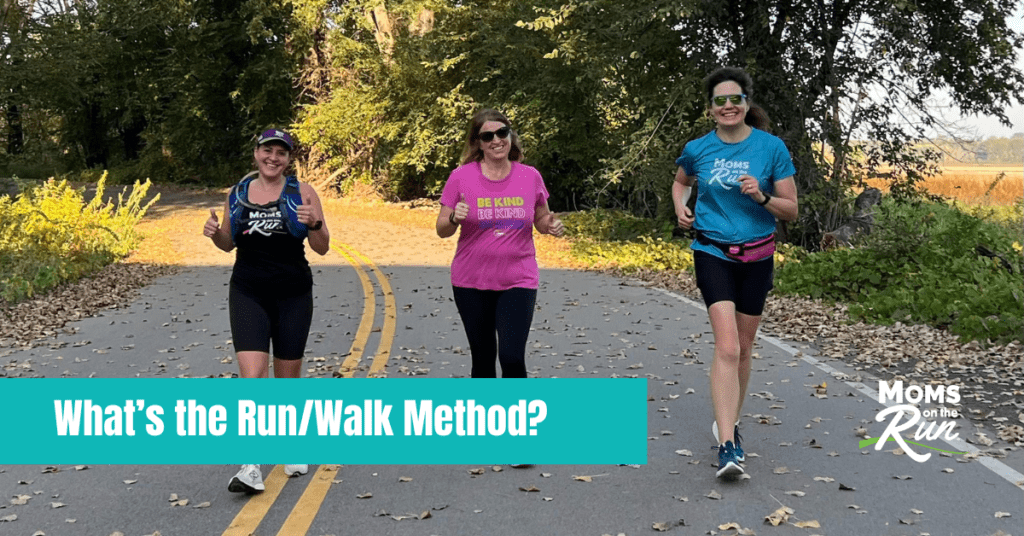
If you’ve been involved with Moms on the Run for any length of time, you’ve undoubtedly heard of the run-walk strategy for training. At Moms on the Run, we believe in training smarter, not just harder. If you’ve ever thought walking during a run “doesn’t count,” it’s time to shift your mindset! In fact, blending running and walking is a proven strategy backed by science. It can help you run longer, feel stronger and stay consistent.
What Is the Run-Walk Strategy?
The run-walk method, made popular by Jeff Galloway, alternates short segments of running with planned walking breaks. He created the huff and puff rule: “when you hear huffing and puffing, take more frequent walk breaks and slow the pace.” Instead of running until you’re exhausted, you switch gears on purpose.
For example:
-
- Run 90 seconds, walk 30 seconds
- Run 3 minutes, walk 1 minute
- Or run 30 seconds, walk 30 seconds
Most importantly, these walk breaks happen before you need them.
The Science Behind Run-Walk Training
Reduce Impact and Lower Injury Risk
Every running step creates stress on your joints and muscles. Over time, that adds up. However, adding walk breaks can reduce impact and give your body time to reset. As a result, many runners experience fewer injuries and less soreness when using this method.
Preserve Energy for Longer Runs
Next, let’s talk about energy. When you run nonstop, your body burns through fuel faster. Eventually, fatigue sets in. By contrast, walk breaks lower your effort and help preserve energy. This allows you to maintain a steady pace and finish strong.
Build Endurance Without Burnout
In addition, run-walk training can build endurance just as effectively as continuous running. The difference? It places less strain on your body. Because of this, you can:
-
- Run longer distances
- Recover faster
- Stay consistent week after week
And consistency is what drives real progress!
Improve Cardiovascular Efficiency
Finally, run-walk acts like interval training. Alternating effort levels helps your heart adapt. Over time, this can improve endurance and make running feel easier at the same pace.
This Is Not “Running Less”
Many runners worry that walking will slow them down. However, that’s not usually the case. In fact, many runners:
-
- Maintain a more even pace
- Avoid late-run fatigue
- Improve race performance
Because they don’t burn out early, they stay strong from start to finish. Some are even able to experience better race times since the walk breaks help them be able to run at a faster pace.
How to Use Run-Walk in Your Training
Getting started is simple:
- Step 1: Choose Your Interval – For example:
-
- Beginner: 15 sec run / 1 min walk
- Intermediate: 30 sec run / 30 sec walk
- Advanced: 3 min run / 30 sec walk
- Step 2: Start Early – Do not wait until you feel tired. Instead, begin your intervals right away. This helps you stay ahead of fatigue.
- Step 3: Stay Consistent – Most importantly, keep showing up. Run-walk helps reduce soreness and prevent burnout. As a result, you are more likely to stick with your routine.

Who Should Use Run-Walk?
Simply put, this strategy works for almost everyone. Besides helping you get your start as a runner, it is great if you are:
-
- Training for your first 5K
- Following a half marathon training plan
- Working toward a marathon training plan
- Returning from injury
- Looking for a more enjoyable workout
The Mental Advantage
Running is physical, but it is also mental. When you know a walk break is coming, the run feels more manageable. In turn, your confidence grows, and instead of feeling overwhelmed, you focus on one segment at a time. This helps many runners feel more positive and in control.
Why It Works for Moms on the Run
At Moms on the Run, we meet you where you are. Our workout classes support all paces and experience levels. Run-walk fits perfectly because it:
-
- Supports injury prevention
- Builds confidence
- Keeps workouts social and fun
- Encourages long-term progress
Whether you are joining a women’s running group or training on your own, this approach helps you stay consistent in your workout routine.
The Bottom Line
Walking during your run is not a setback but rather a smart strategy. It’s one of the many interval training methods we use at Moms on the Run to help our members train at a variety of intensities, for the maximum benefit to their health and fitness. Learn more about this philosophy here!
By combining running and walking, you reduce impact, preserve energy, build endurance and stay consistent.
So next time you head out, try it! With the right strategy, you can run stronger, feel better and enjoy every step.