

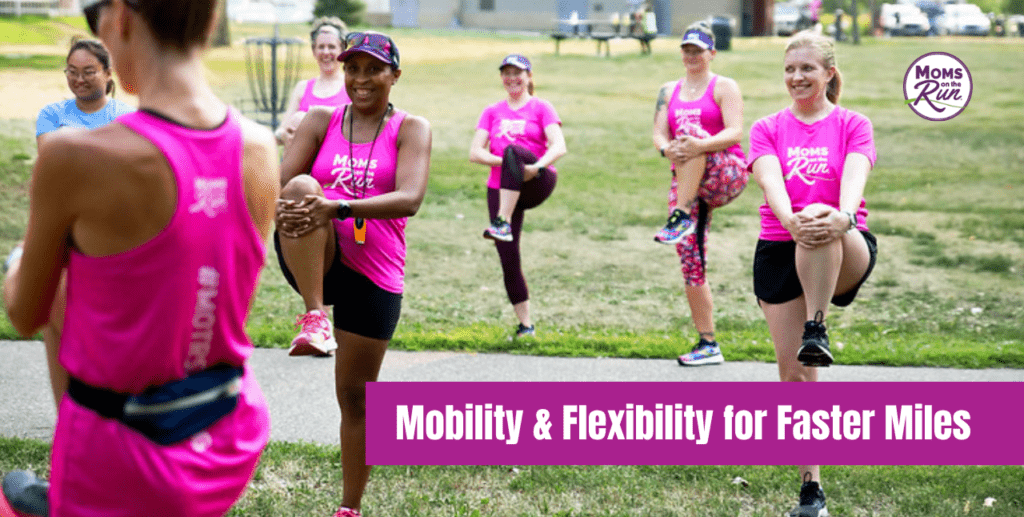
While you may consider running to be a lower-body sport, efficient running mechanics rely on the entire body moving well together. Maintaining mobility and flexibility in the hips, ankles, calves, and thoracic spine can improve stride efficiency, reduce unnecessary stress on joints, and help lower the risk of common overuse injuries. Limited mobility in one area often forces the body to compensate elsewhere, which can contribute to issues like IT band syndrome, shin splints, plantar fasciitis and low back pain. Let’s take a look at some areas we especially want to focus on as female runners.
Hip mobility is particularly important because the hips help stabilize the pelvis and control leg alignment with every stride. Tight or restricted hips can lead to excessive inward knee movement and inefficient stride mechanics, increasing stress on the knees and lower legs. Incorporating exercises like hip circles, lunges with rotation, and glute activation drills can help improve range of motion while also strengthening the muscles that support proper running form. Learn more on Hip Stability and Glute Activation here.
Ankle and calf mobility are equally essential for maintaining smooth, efficient movement. Restricted ankle mobility can shorten stride length and alter foot strike patterns, forcing additional strain onto the knees and hips. Tight calves can also increase tension on the Achilles tendon and plantar fascia. Dynamic warmups that include calf raises, ankle rolls, and walking lunges can prepare the lower legs for running, while regular calf stretching and foam rolling may help maintain mobility over time.
One area runners often overlook is thoracic spine mobility. The thoracic spine — the middle and upper back — plays a major role in posture and arm swing during running. When this area becomes stiff from sitting or poor posture, runners may rotate inefficiently through the torso or compensate by arching the lower back. Exercises such as open-book stretches, thoracic rotations, and foam roller extensions can improve upper-body mobility and help runners maintain a more upright, relaxed posture.
Consistency is the key to improving mobility and flexibility. We don’t need hour-long stretching routines to see benefits. Even 5-10 minutes of targeted mobility work before and after runs can support better movement patterns and recovery. Incorporate dynamic movements before running to prepare the body for activity, and static stretching afterwards when muscles are warm. By prioritizing mobility alongside your strength and endurance training, you can move more efficiently, feel better during runs, and build a healthier foundation for long-term performance.