

You have a hectic life: work, kids, meals, errands… But you kind of secretly want to run a 5K. Maybe you’ve watched others cross a finish line and thought, “Hey, could I ever do that?” Spoiler alert: yes. A 5K is absolutely within reach for most people, even if your days are full. It doesn’t matter if you haven’t run in years (or ever). If you’re ready to try, this could be your time to run a 5K.
Here’s what you need to know before starting, what training looks like, and how race day might feel.
WHO CAN RUN A 5K?
A 5K is 3.1 miles. It’s one of the most accessible and popular race distances available.
- You don’t need to be a seasoned runner to run a 5K. Because the distance is relatively short compared to a 10K, half-marathon or marathon, most people who are generally healthy and active can train for it.
- It fits well into busy schedules. You don’t need to log double-digit miles weekly or spend hours training. You can prepare on a modest plan of just 3 sessions per week.
- Walking counts too. Many first-time 5Kers do a run/walk approach. That makes it friendly for all fitness levels and reduces risk of burnout or injury.
- It’s a boost, not a burden. Regular training for to run a 5K can improve heart health, increase endurance and help with stress relief. These benefits are especially valuable for a woman juggling many roles.
So yes, whether you’re a longtime walker, a mom chasing after kids, or someone who hasn’t laced up running shoes in years – you can do this! That’s part of what makes 5Ks so magical.
WHAT YOU SHOULD KNOW BEFORE YOU START
Before you sign up for that first 5K (or hit “register now”), think through the following:
- Check with your doctor. Before you jump into training, it’s always a good idea to check in with your provider. This is especially important if you’re new to exercise, coming back from injury, or managing any health conditions.
- Make sure you’re physically ready. Most beginner 5K programs assume you can walk or lightly move for 20-30 minutes already. If you haven’t been active at all recently, you might start with walking, brisk walking or light movement, then gradually build up.
- Think about shoes and gear. Ensure you have a good, properly fitted pair of running shoes. Cheap, ill-fitting shoes increase risk of discomfort or injury. If feasible, purchase from a running store where they will watch your gait and recommend shoes specifically for your form.
- Prepare mentally for consistency. Running (or run/walking) just once won’t get you to run a 5K. But a plan that builds gradually, with a mix of training days, rest days and possibly cross-training, helps you stick with it.
- Don’t expect perfection every day. There will be days when you’re tired, don’t feel like running or running feels more challenging. There may be schedule hiccups. That’s normal. What matters is consistency over time.
- Know why you’re doing it. For many busy women, a 5K isn’t about running fast. It’s about feeling strong, carving out time for yourself, setting an example or checking it off your bucket list. Let that “why” drive you.
WHAT TRAINING LOOKS LIKE
You don’t need a massive time commitment to train. Ensure you start with a beginner 5K training plan. Moms on the Run provides training plans and 5K-targeted workouts to its members. Typically, most plans are 8 to 12 weeks and include:
- 3-4 workouts per week. This is usually a mix of run/walk sessions and cross-training (like strength and conditioning).
- Run/Walk Intervals to Start. Your first sessions might be something like 1 minute running, 2-3 minutes walking for about 20-30 minutes total. Or you may opt for more frequent 30 second breaks, depending on your goals and the amount you want to run vs. run/walk the 5K race. Over the coming weeks, you can gradually shift towards more continuous running.
- Give yourself rest. Training doesn’t mean running every day. Especially when busy, rest (or light activity) gives your body time to recover and adapt. It also helps avoid burnout.
- Warm-up & stretch. Before you run, do a short dynamic warm-up (walking, light jogging, leg swings and mobility exercises). After, do gentle static stretching and consider foam rolling to help muscles recover and reduce soreness.
In short: you build slowly, listen to your body and stay consistent. Before you know it, you’ll be running three miles.
WHAT RACE DAY LOOKS LIKE (AND HOW TO SURVIVE IT)
For many first-time 5Kers, race day is a mix of nerves, excitement and proud accomplishment while friends or family cheer you on. Here’s what to expect and a few pointers to help you enjoy it:
- Don’t do anything new that morning. Common newbie mistakes include new shoes, new gear, or a different breakfast. Save those experiments for training runs.
- Pack your essentials. Running shoes, a comfortable weather-appropriate outfit, your race bib pinned on, a watch (if you want to monitor pace/time), a bottle or hydration plan, and post-race clothes/sandals/snack.
- Have a fueling and hydration plan. The night before, eat a balanced meal (complex carbs + lean protein + veggies). Avoid heavy meals, alcohol and too much caffeine.
- Warm up gently. Complete a light jog and then head to the start. When the gun or horn goes off, don’t feel pressure to sprint, especially at the beginning. Treat your first 5K as a personal celebration. If you need to walk, that’s totally fine! Walking is always a welcome part of a running and racing plan.
- Be kind and courteous to others. This is especially important if the race is crowded. Stick to the right if you walk or go slower, move left to pass. Watch where you’re going before spitting water, etc. Race etiquette keeps things safe and pleasant for everyone.
- Finish strong(ish). Once you complete the race, keep moving through the finish funnel. Don’t stop abruptly as this can cause congestion or injury. Then, give yourself a proud moment. You just did a 5K!
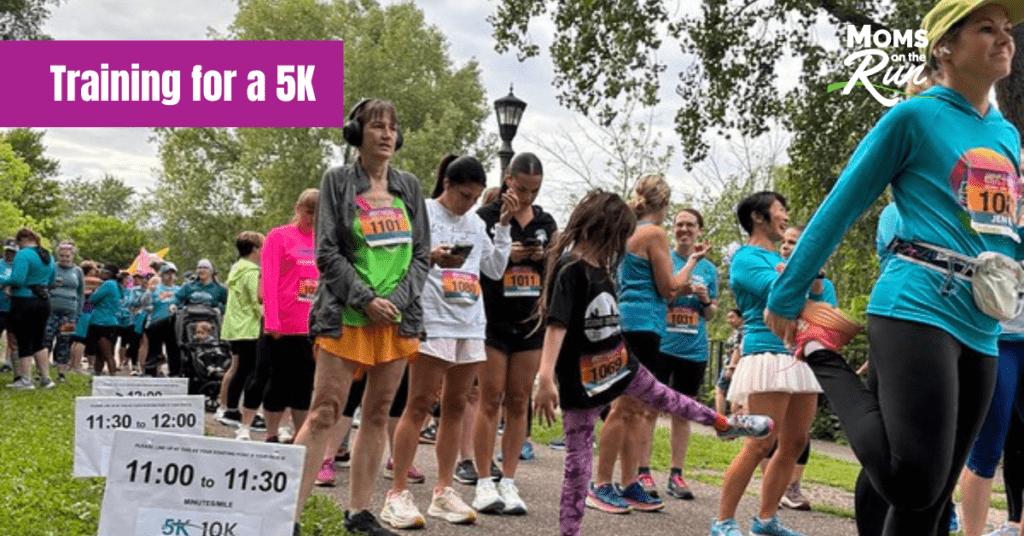
The vibe at a 5K tends to be supportive, upbeat and full of energy. You’ll see seasoned runners, first-timers, walkers with strollers, moms with kids and grandmas. All kinds of people cross that same finish line. Racing is not only fitness; it’s a community.
THE REAL POWER OF RUNNING A 5K
Here’s why finishing a 5K can be so much more than just checking off a distance:
- It’s a doable milestone. Training for a 5K isn’t the same commitment level as a marathon. It’s a significant, tangible goal you can work toward in a matter of weeks.
- It’s flexible to fit your life. Training to run a 5K is manageable, and you can adjust it around family, work or busy days.
- It’s empowering. Crossing a finish line will give you a sense of accomplishment, strength and confidence. As busy women, building in something for ourselves feels revolutionary.
- It’s community-building. Whether you run with a friend, a mom running group, or just yourself, you’re joining a wider world of women who believe in trying, showing up, finishing and cheering each other on.
HOW TO START IF YOU’RE THINKING: “YES — I WANT IN”
Ensure commitment by picking a goal 5K date at least 8-12 weeks out and register. Having that date on the calendar helps keep you motivated. If you’re in the Minneapolis-St. Paul area, register for the Moms on the Run 5K/10K. You don’t have to be a member to participate – all women are welcome!
Consider joining your local Moms on the Run fitness franchise. Moms on the Run is a welcoming, supportive place for new runners to begin their journey. We have 5K plans and our coaches meet you right where you are.
No matter how busy life gets, you deserve a goal that reminds you how strong and capable you are. Lace up, start small and believe in yourself. That finish line is closer than you think.