

Glutes: Foundations of Running, Topic 3
What are Glutes?
Glutes, short for gluteal muscles, are the three primary muscles in the buttocks: gluteus maximus, gluteus medius and gluteus minimum. They define the hip and buttock region.
Why are glutes So important?
Our glutes are the largest muscle group in our body. They are the powerhouse muscles that surround the pelvis. They help with injury prevention, performance and metabolism.
Although they are so important, the gluteal muscles are commonly left out of runners’ strength programs. And that omission matters more than many runners realize.
When we run, the glutes hold our pelvis level and steady, extend our hip, propel us forward, and keep our legs, pelvis, and torso aligned. So when our glutes are faulty, our entire kinetic chain is disrupted. Studies link glute weakness to Achilles tendinitis, shin splints, runner’s knee and iliotibial-band syndrome.
PROPER FORM MATTERS
Before we work our glutes, we need to ensure we have the proper pelvic tilt. This will be similar to what we practiced in the lying position for core work. When we sit all day, our hip flexors and hamstrings to become tight causing our hips to tilt forward. Thus, this makes our lumbar or lower curve bigger than it should be.
Look in the mirror and place your hands on your hips, tilt your hips forward letting your abs relax. Next, tuck your tailbone under, making your back flat. See how this makes your hands level to the ground and causes your abs to engage. This posture will allow you to use your glutes correctly.
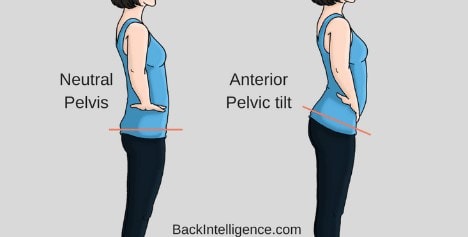
Image from BackIntelligence.com
Exercises to strengthen your glutes
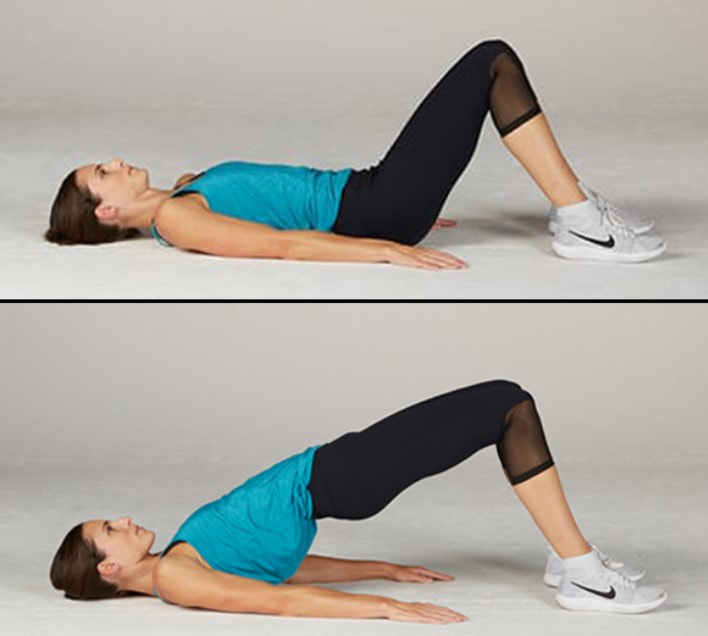
Glute bridges:
Start laying flat on your back with feet hip width apart, knees bent and feet flat. Leading with your hips, squeeze hips up toward ceiling, firing glutes first and driving through heels. Think about opening your rib cage and drawing your heels toward your glutes. Raise up for a count of 3, hold at the top for 1, then lower. Complete 15 reps.
Clamshell
Lay on your side with knees bent at a 45 degree angle from your hip. Squeezing your glute, bring your knee up toward the ceiling, holding for a second, then lower. Do 15 and then switch sides and repeat. (Image by openfit.com)
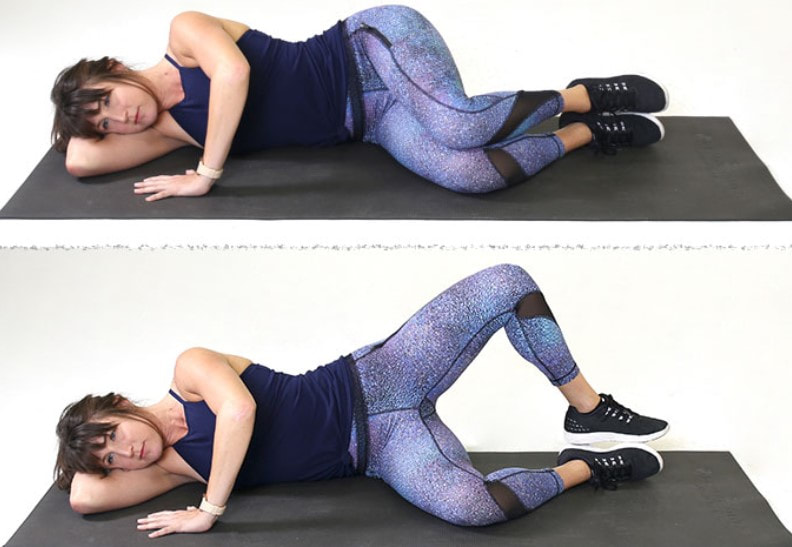
Image from OpenFit
Glute activation through movement
Hip Hike
Stand with left foot on a step, box, or bench at least four inches high with right foot hanging off the edge. Keep both hips squared forward and shoulders level. Place hands on hips for an extra visual aid and balance. Keeping left leg straight, no bend in knee, raise right hip directly upward and then use hip and core to lower right foot below the step. Return to the starting position and repeat slowly and with control. Do 15 on each side. (Image by: veryhealth.com)
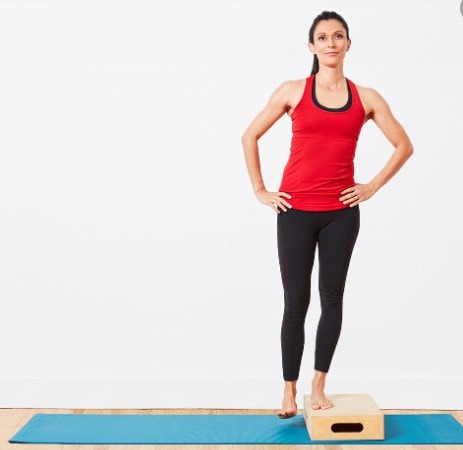
Image from Veryhealth
Single leg Dead lift
Start standing with feet hip-width apart. Shift weight to your right leg, keeping your shoulders back and your back straight, hinge at the hips and reach your hands toward the ground as the left leg swings back behind you. Return back to the starting position and repeat. As you build strength, hold weights or a medicine ball for an added challenge.
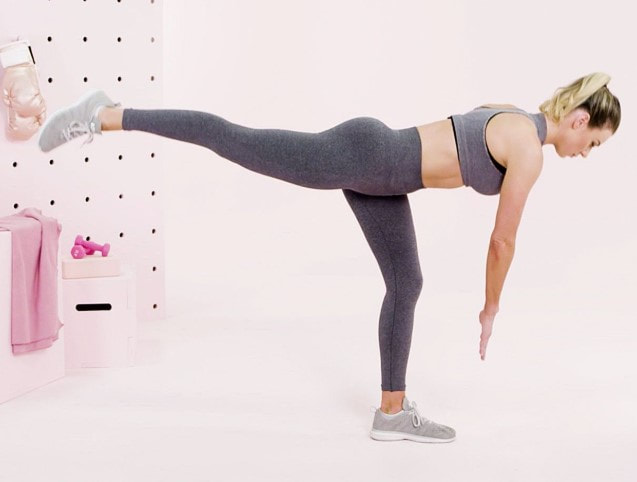
Image by: Women's Health Magazine
In addition to doing these exercises for general strength at least three times a week, it’s a good idea to do some light glute work before you go out to exercise, to “turn on” the right muscles. This is called glute activation, and it will help you to walk and run with proper form, using the “posterior push off.”
Applying to Daily Movement: Posterior push off
Practice push-off walking as you go throughout your day. Think of walking like paddling a canoe – pushing the paddle back creates the force that pushes the boat forward. This is called posterior push-off. While you are walking, focus on your glutes and notice what happens as you use your foot to push through the movement. Think about squeezing your glute to bring your body forward, rather than lifting your leg up with your hip flexor. This can be practiced around the house, or pushing the cart around the store. Once you’re comfortable with the movement while walking, try pushing with your glutes while out on a run!
Your glutes are the powerhouse behind every run. Strengthen them consistently and you’ll run stronger, feel better and stay healthier.

We're more than just a running group; we're a community of inspiring women.
Find a Moms on the Run location near you. Alternatively, learn about becoming a Moms on the Run franchise owner.